About the work
The reason someone mattered is the first thing removed
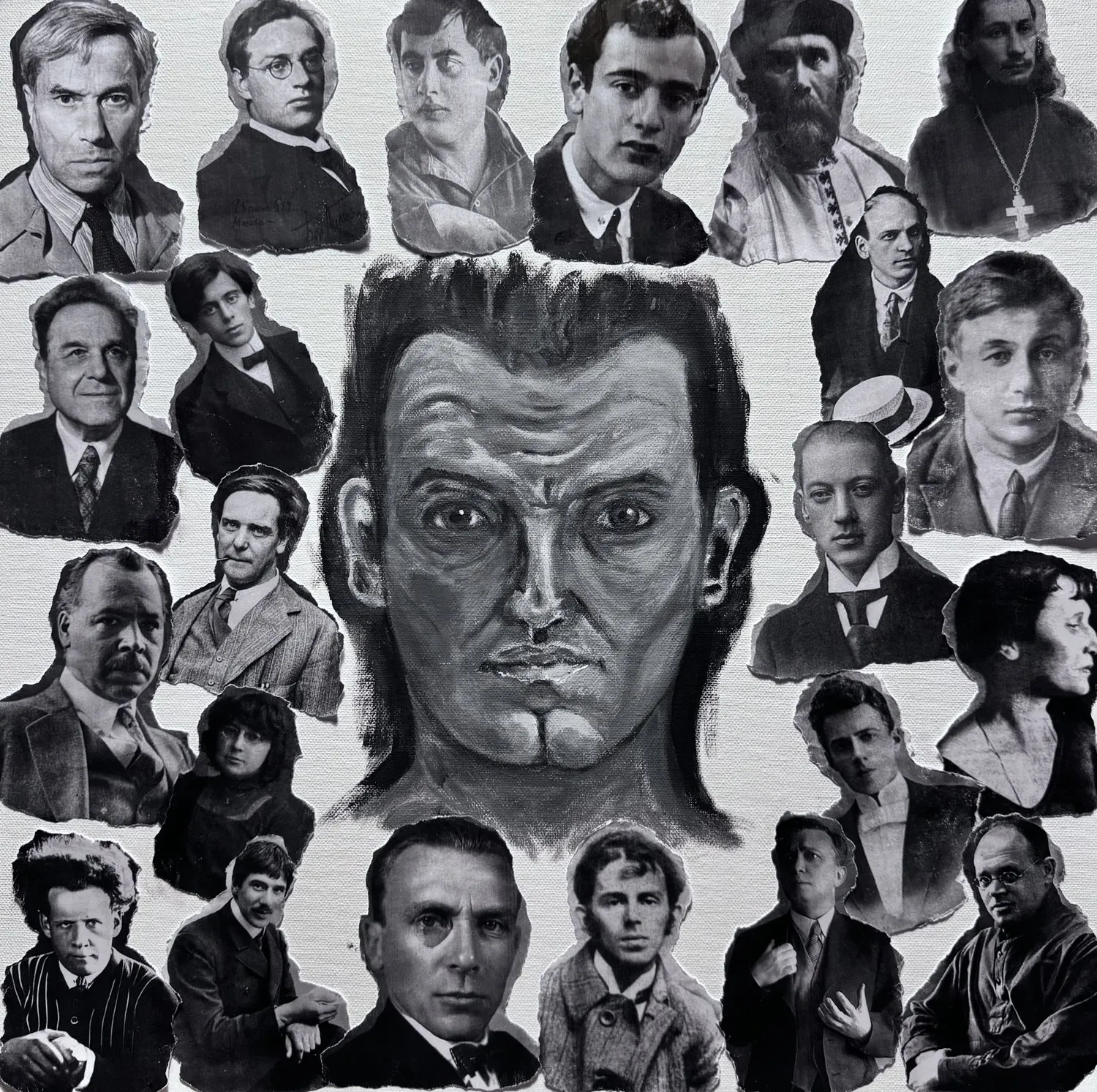
At the centre of this piece is a painted portrait of Alexei Navalny, rendered in acrylic, his face emerging from a dense collage of black-and-white printed photographs of historical figures who were censored, imprisoned, exiled, or erased for opposing political power in their time.
None of the surrounding faces are random. Each belongs to a person whose resistance has been minimized, decontextualized, or quietly omitted from official memory, particularly in Russia, where their full histories are rarely told. What remains in public memory is often a fragment: a poet, a scientist, a priest, a writer, stripped of the fact that they once stood against the machinery of the state and paid for it. The system that erased them did not necessarily kill their image; it simply edited their story until the act of resistance disappeared from it.
Navalny occupies the same position today, but in real time. Right now, his fight against the Kremlin is still part of public memory, still attached to his name. This piece asks what happens next: whether his history will be allowed to remain intact, or whether it will undergo the same slow editing that erased the political dimension of the people surrounding him in this collage. The painted centre, raw and unfinished looking compared to the printed photographs around it, represents a memory still being formed, still vulnerable to revision, not yet fixed into the safe, depoliticized version history tends to settle for.
The piece is built on a simple, uncomfortable observation: authoritarian power does not need to physically erase a person to neutralize them. It only needs time and the public’s willingness to forget which part of the story mattered. Each face printed and then torn by hand, evoking both archival material and propaganda’s habit of cutting people out of their own context. Painting Navalny by hand, rather than printing him like the others, is a refusal to let that process complete itself: an insistence that his resistance, and theirs, stay visible as resistance, not just as a face.
Memory Remains isn’t only about Navalny. It is about the mechanism that turns any person who fights political power into a safely apolitical historical footnote, and about the responsibility of keeping that fight legible while it is still possible to do so. The work proposes that history does not repeat because the past is forgotten entirely, but because the specific reason someone mattered is the first thing removed. This piece is an attempt to hold that reason in place, for as long as the paint and the paper allow it to remain.